
Our Blogs
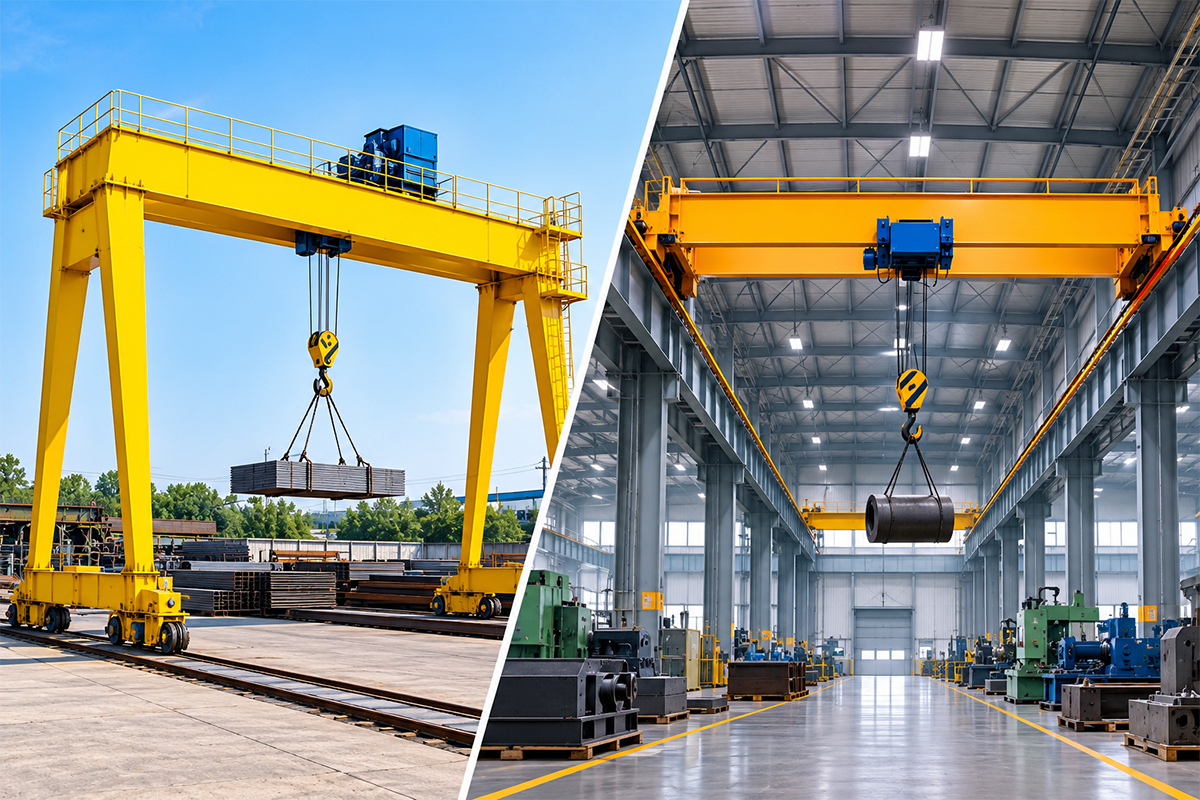
Gantry Crane vs Overhead Crane: Key Differences Explained
Introduction
In modern industrial facilities, efficient material handling is essential for maintaining productivity, safety, and smooth operations. Gantry cranes and overhead cranes are two widely used lifting solutions for moving heavy materials. Although both are designed for lifting and transporting loads, their structures, installation requirements, and applications are different. Understanding these differences can help industries choose the right crane for their specific requirements.
What Is a Gantry Crane?
A lifting system supported by legs which run along rails or wheels on the ground is called gantry crane. It is not necessarily required to be mounted on a permanent supporting structure or building columns like an overhead crane. The crane is comprised of a horizontal bridge, legs, trolley and hoist. Gantry cranes are commonly used in outdoor yards, construction sites, warehouses, shipyards, steel plants, and precast concrete industries. They are particularly useful when a facility does not have suitable overhead support for crane installation. One of the major advantages of gantry cranes is their flexibility. They can be installed indoors or outdoors and can cover large working areas depending on the rail arrangement and crane design.
What Is an Overhead Crane?
An overhead crane is a bridge-type lifting system installed above the working area, generally supported by runway beams attached to the building structure or columns. The crane moves along the runway while a trolley and hoist travel across the bridge to lift and position loads. Overhead cranes are widely used in manufacturing plants, engineering industries, automotive facilities, warehouses, foundries, and production units. They help move heavy materials efficiently while keeping the factory floor relatively clear. An experienced Overhead Crane Manufacturer can design the crane according to factors such as load capacity, span, lifting height, runway length, operating frequency, and workplace conditions.
Gantry Crane vs Overhead Crane: Key Differences
The main difference between these cranes is their support structure. A gantry crane is supported by legs reaching the ground, whereas an overhead crane operates on an elevated runway system.
Installation:Gantry cranes generally require ground-level rails or tracks. Overhead cranes require suitable building structures, runway beams, and supporting arrangements.
Space:Gantry cranes occupy some floor space because of their supporting legs. Overhead cranes keep the floor area more open.
Application: Gantry cranes are suitable for outdoor storage yards and locations without adequate building support. Overhead cranes are ideal for indoor manufacturing and production facilities.
Mobility:Gantry cranes can sometimes be relocated depending on their design. Overhead cranes are generally integrated into the building's runway system.
Cost: The overall cost depends on capacity, span, runway requirements, structural modifications, installation, and operating conditions. Therefore, selecting a crane based only on initial price may not provide the best long-term value.
Which Crane Is Right for Your Industry?
The right choice depends on your facility layout, available space, load requirements, operating environment, and budget. Gantry cranes are often preferred for outdoor applications and areas where building support is limited. Overhead cranes are generally more suitable for indoor production environments requiring regular and efficient material movement. Before selecting a crane, industries should evaluate lifting capacity, span, lifting height, duty cycle, available installation space, safety requirements, and future production needs. Professional crane manufacturers can assess these factors and recommend a suitable configuration.
Conclusion
Gantry and overhead cranes are two effective solutions available for industrial lifting, but they are quite different in terms of their design and application. Knowing these differences enables companies to choose the safer, more efficient and cost-efficient material handling system. A seasoned Overhead Crane Exporter in Coimbatore can assist industries in their procurement processes and industrial operations, offering them reliable lifting equipment and tailored solutions.
